Retiring old computers, servers, and other IT equipment means that businesses face a critical decision, impacting their budget and data security. The terms “IT Asset Disposition” (ITAD) and “hard drive shredding” represent different approaches to managing end-of-life electronics and protecting sensitive information.
IT Asset Disposition covers the retired equipment life cycle. Hard drive shredding is a high-security method focused on complete data destruction. This guide will clarify the differences to help you choose the right path for your organization’s security needs.

What Is IT Asset Disposition (ITAD)?
IT Asset Disposition (ITAD) is a comprehensive process for managing and retiring outdated or unwanted IT equipment. The primary goal of an ITAD program is recovery of as much value as possible from old assets while managing data security and environmental compliance.
A full-service ITAD program typically involves several steps, beginning with inventorying and secure transporting of the equipment. Next, the data-bearing components of each machine are removed, shredded, and destroyed. This NAID AAA Certified process renders all data completely irrecoverable.
After data-bearing components are removed and shredded, functional equipment may be refurbished and resold. Assets with no resale value are broken down, and their components are sorted for recycling. Destruction is just one possible outcome within a larger ITAD framework.
What Is Hard Drive Shredding?
Hard drive shredding is a method of complete physical destruction. Unlike data wiping, which leaves the hardware intact, shredding uses industrial-grade equipment to grind hard drives, solid-state drives (SSDs), backup tapes, and other electronic media into small, unrecoverable fragments. This renders data stored on the platters or chips physically impossible to recover.
This method bypasses software entirely, meaning that no residual data can be accessed. At TrueShred, our secure media and electronics shredding service provides a documented, verifiable process, guaranteeing your confidential information is gone for good, helping you meet strict compliance and privacy guidelines and regulations.
Key Differences
Both ITAD and hard drive shredding address end-of-life electronics, and both are critical aspects of your data security and disposition plan. Understanding the processes involved is key to making an informed decision for your business.
Data Security Guarantee
An ITAD provider often uses data wiping software to sanitize hard drives. They are effective software-based methods but are not foolproof. They can fail from drive errors, hidden partitions, or human error, potentially leaving sensitive data intact.
Physical destruction is the only method that ensures 100% data irretrievability. For this reason, it is the method required by the NSA and Department of Defense for their data protection guidelines. Working with a NAID AAA Certified company like TrueShred provides third-party validation that the destruction process meets the highest security standards.
Environmental Handling
Both responsible ITAD vendors and secure shredding companies prioritize proper environmental handling. ITAD programs excel at promoting reuse, which is the most environmentally friendly option. By refurbishing and reselling equipment, they extend the life of electronics.
Secure shredding focuses on the “recycle” aspect. After the drives are destroyed, the resulting metal and electronic fragments are securely transported to certified recycling partners who smelt them down and refine them for use in new products.
Primary Use Cases
ITAD is best suited for equipment where data can be verifiably wiped. This might include monitors, keyboards, or networking equipment. Hard drive shredding is the required choice for any device that stores proprietary, confidential, or regulated data.
Which Option Is Right for Your Business?
The best choice depends on your industry, the type of data you handle, and your risk tolerance. Your decision should be guided by compliance requirements and a clear assessment of the information stored on your devices.
For businesses in highly regulated industries like healthcare, finance, legal, and government, the decision is often straightforward. Data privacy laws like HIPAA, FACTA and GLB demand verifiable proof of data destruction. In these cases, hard drive shredding isn’t just the best option; it’s a necessary component of compliance. For example, our HIPAA-compliant shredding service provides a Certificate of Destruction that serves as your official record of compliance. You also have the option for our personnel to scan the serial numbers of your devices for inclusion on your certificate of destruction
If you are a government agency or contractor, physical destruction is frequently mandated to protect classified or sensitive information. However, it’s critical to segregate data-bearing media like hard drives and SSDs from the rest of the assets. The best approach is to partner with a firm like TrueShred to handle both your secure data shredding and your end of life cycle ITAD requirements.
Your Partner for Secure Data Destruction
Ultimately, ITAD provides a framework for managing the logistics and value of old hardware, while hard drive shredding provides the ultimate guarantee for data security. By failing to physically destroy old hard drives, you leave your company, clients, and employees vulnerable.
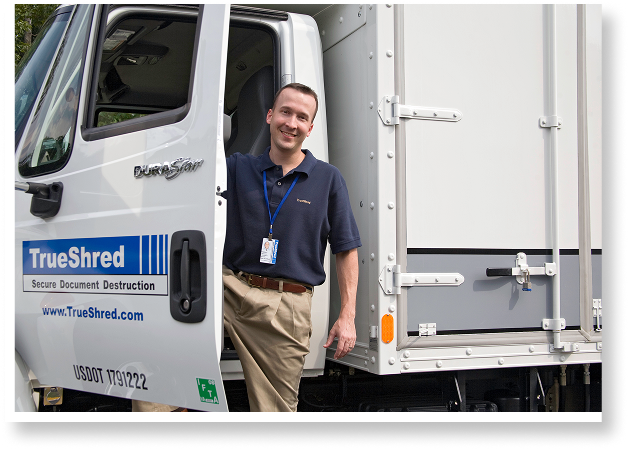
Our on-site shredding services allow you to witness the entire destruction process, giving you complete peace of mind. We provide a documented, secure, and compliant solution for all your electronic media.
Contact TrueShred today to get a free quote for our secure hard drive shredding services and protect your business’s most valuable information.
Hard Drive Shredding & IT Asset Disposition FAQs
Can’t I Just Wipe Or Degauss My Hard Drives?
Software wiping can be effective, but it’s not guaranteed. It can fail to erase data from bad sectors or hidden partitions, and the process must be audited for every single drive to be effective. Degaussing, which uses a powerful magnet, works on older magnetic hard drives but is ineffective on modern solid-state drives (SSDs). Physical shredding is the only method that destroys all types of drives beyond recovery.
Is Hard Drive Shredding Environmentally Friendly?
Yes. After shredding, the destroyed particles are smelted down, allowing the raw materials to be repurposed for new manufacturing.
What Does NAID AAA Certified Mean For Hard Drive Shredding?
NAID AAA Certification is the highest security standard for the information destruction industry. It means a shredding provider has undergone rigorous, unannounced audits of its hiring practices, operational security, and destruction processes. Choosing a NAID AAA Certified vendor like TrueShred verifies that your sensitive data is handled with the utmost security and integrity from collection to destruction.
What Types Of Media Can Be Shredded Besides Hard Drives?
Our industrial shredders can destroy a wide range of electronic media. This includes solid-state drives (SSDs), backup tapes (LTO, DLT), CDs, DVDs, floppy disks, zip drives, USB flash drives, and even cell phones and other small electronic devices. If it stores data, we can securely destroy it.